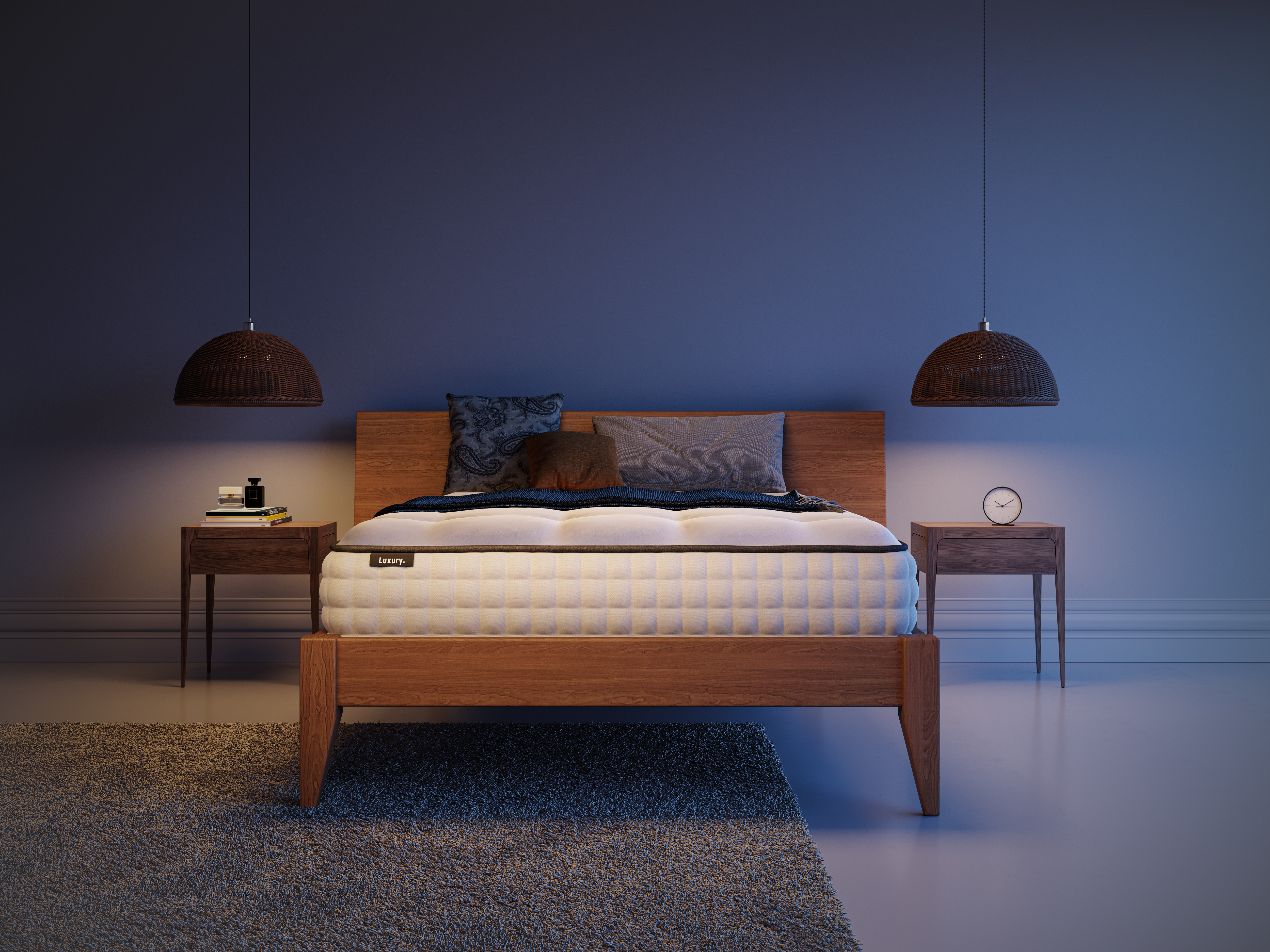
If you wake up with a dead arm, a heavy lower back, or the feeling that you’ve done a workout in your sleep, your body is sending you a signal that you shouldn’t ignore. This guide is designed for those whose sleep may feel ‘off’, rather than acutely painful, in which case we would recommend talking to a specialist.
This guide is based on years of mattress development, observed failure patterns, and direct feedback from the thousands of sleepers we’ve helped find their perfect match. We view sleep through the lens of spinal neutrality - the biological blueprint that allows your posture to recover from the day’s stresses. However, body weight, shoulder width, and previous injuries will change how strongly you feel the effects of your sleeping surface.
Note: While the right support is vital, we recommend that you consult your local GP or a physiotherapist for professional medical advice, if you suffer from persistent sharp pain.
If you’re a side sleeper, but you wake up with numb arms, sore hips, or feel a constant need to roll over, this section applies to you. Side sleeping is the most popular sleeping position, but it places the highest pressure on the narrowest points of your body. Most people drift between at least two of these variations during the night.
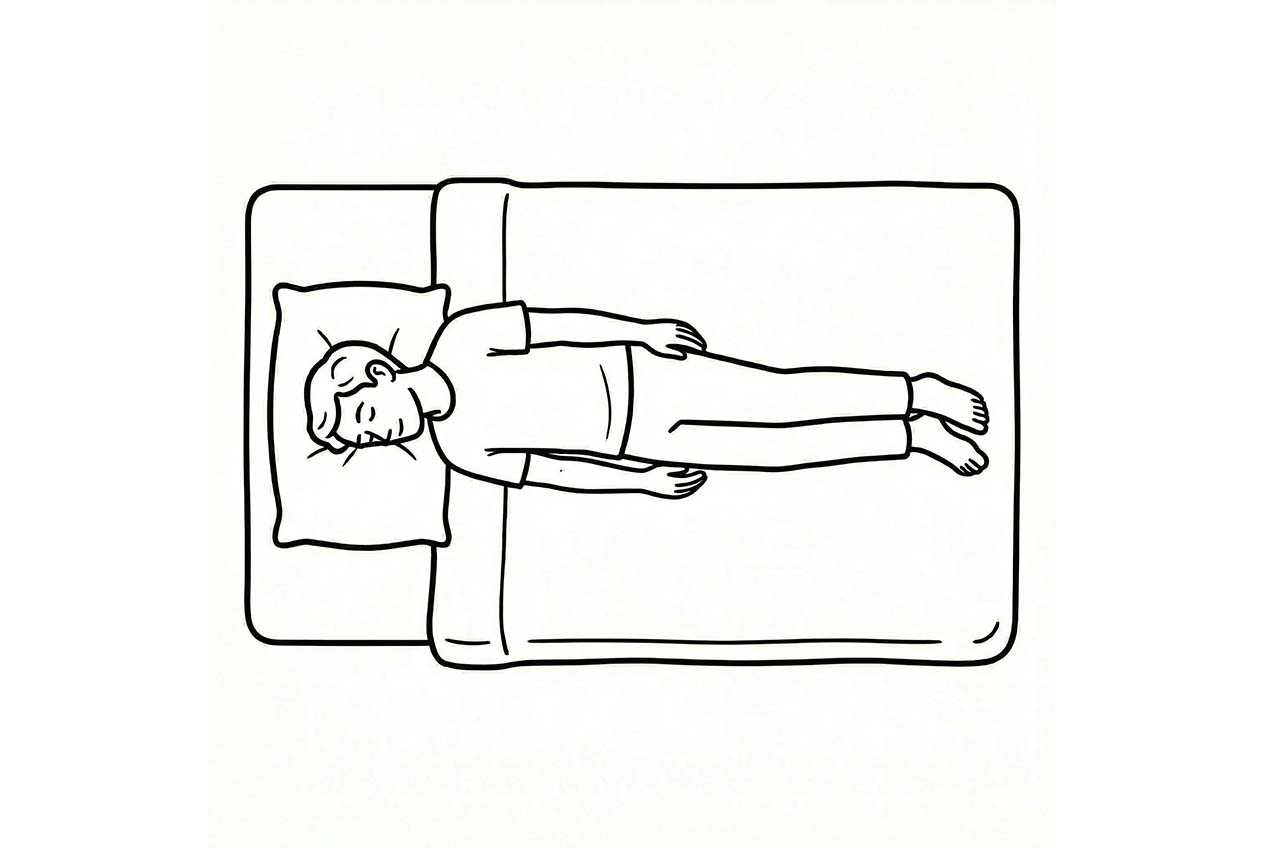
What is it: You sleep on your side with your arms resting straight down and your legs extended.
What’s happening in your body: Your weight is concentrated in a narrow, high-pressure line along your humerus (upper arm) and the point of your hip bone.
Common mistake: The most common misconception we see is when people opt for an ‘extra firm’ mattress to protect their back. It compresses nerves and restricts circulation, leading to that classic pins-and-needles sensation.
Tonight’s fix: Match your pillow height to the exact width of your shoulder.
Why this works: This reduces torque (a twisting force) by keeping the spine aligned while muscles relax.
Structural fix: You require a mattress with high contouring and pressure relief to allow the shoulder to sink safely. A memory foam mattress is generally the best choice for this.
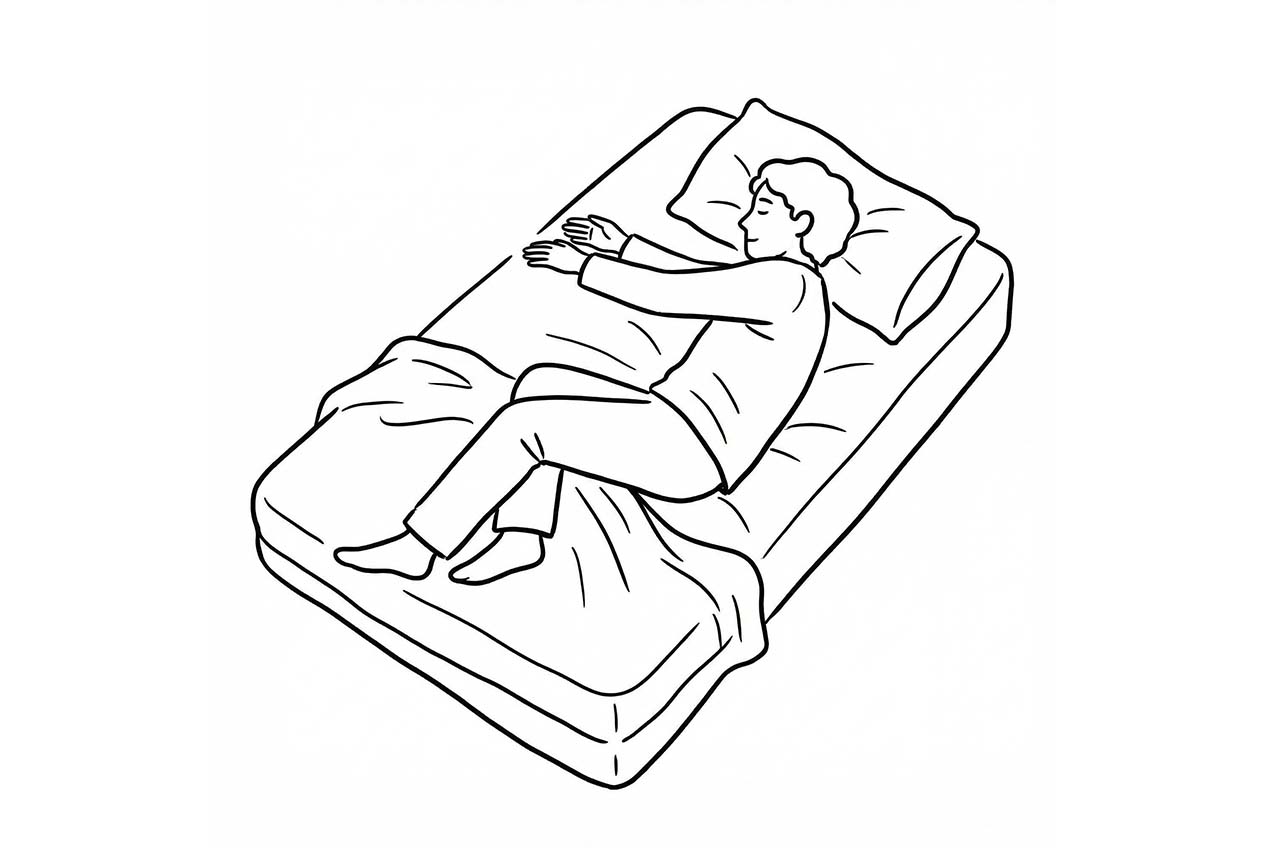
What is it: You sleep on your side with your arms reaching out in front of you.
What’s happening in your body: Reaching forward rotates your upper spine and stretches the muscles across your shoulder blades.
Common mistake: Using a pillow that is too thin, causing the top shoulder to ‘slump’ forward.
Tonight’s fix: Hug a slim pillow or spare duvet to support your top arm.
Why this works: This maintains the squareness of your shoulders and prevents back muscle over-extension.
Structural fix: You’d most likely suit a pocket sprung mattress with high responsiveness as it’ll be able to handle your asymmetrical weight distribution and support each of your pressure points.
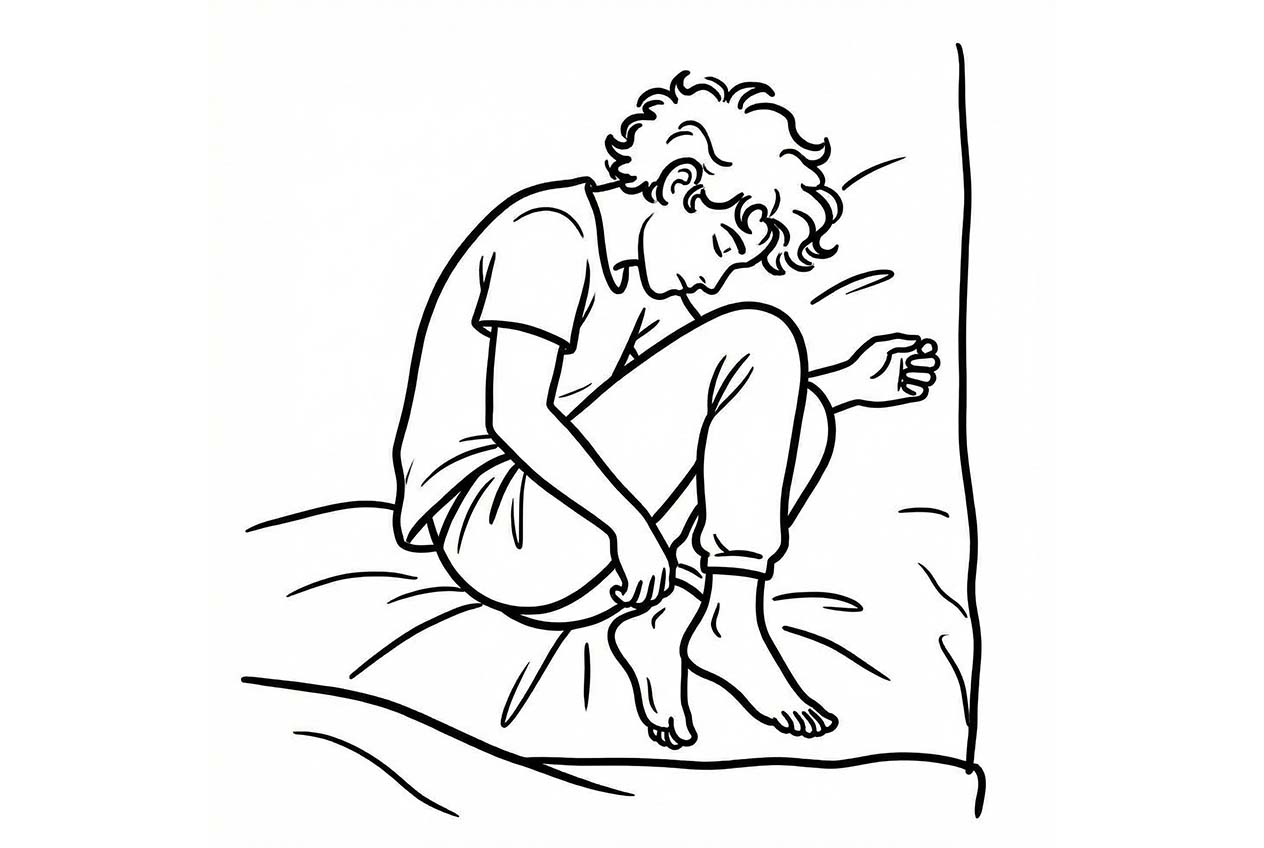
What is it: You are curled tightly on your side, knees tucked high and chin down.
What’s happening in your body: Your spine is in a full, rounded curve, which can compress the diaphragm.
Common mistake: Using a pillow that is too low or thin while tucked in this position. Because your spine is in a full, rounded curve, a low pillow forces your head to tilt down significantly. This deepens the tuck of your chin toward your chest, which further compresses the diaphragm and restricts your airway, leading to that unrefreshed, ‘tight’ feeling in the morning.
Tonight’s fix: Consciously ‘untuck’ your chin from your chest to open your airway.
Why this works: Opening the curve improves oxygen flow and reduces joint compression.
Structural fix: You should look for a pocket sprung mattress with its independent response to cradle the sharp pressure points of the hips and shoulders. It’s ideal here as the individual springs can move independently to contour to the sharp, concentrated pressure of the knees and shoulders without sagging elsewhere.
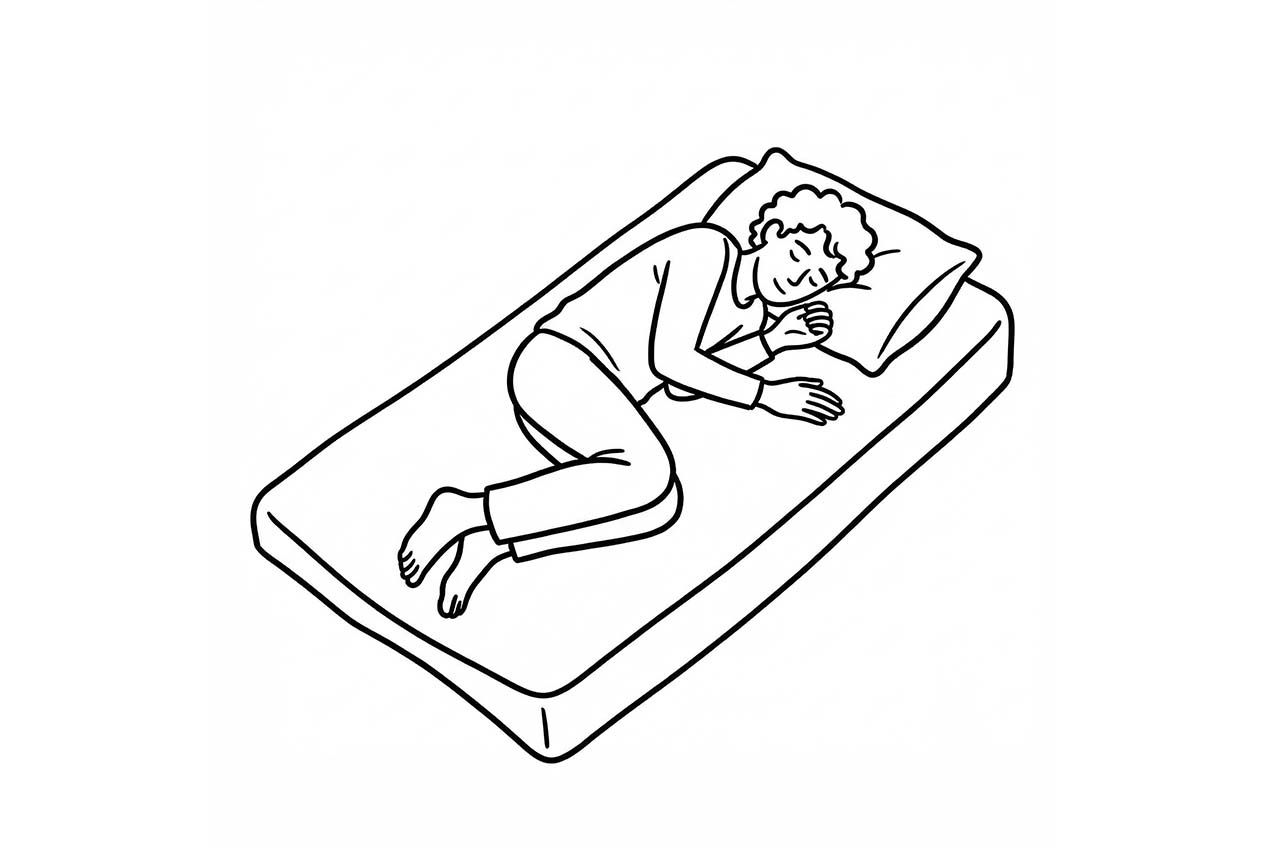
What is it: A relaxed curl where your legs are only slightly bent, maintaining a more natural spinal curve.
What’s happening in your body: This is generally the healthiest side style and seen as the most ideal position for sleeping. However, it can mean you’re prone to your top leg often sliding forward, twisting your pelvis.
Common mistake: Sleeping with your knees directly on top of each other without padding can often cause your top leg to slide forward. This then rotates your pelvis and puts torque on your lower back, which often leads to morning stiffness.
Tonight’s fix: Place a pillow between your knees to keep your hips ‘stacked’.
Why this works: This keeps the pelvis neutral and stops the lower back from twisting during the night. This allows your muscles and joints to fully relax so you get a great night’s sleep.
Structural fix: You’d likely benefit from the zoned support of a pocket sprung mattress to hold the waist while cradling the hips. We’d recommend aiming for a medium-firm feel, often referred to as the ‘universal feel’. How you feel the firmness depends on various factors so it is best to see what works best for you.
If you wake up with a dull ache in your lower back or feel like your spine never truly settles then this could really help you, if you’re commonly a back sleeper
What is it: You sleep flat on your back with your arms at your sides.
What’s happening in your body: Gravity pulls your lower back down, often creating a ‘lumbar bridge’ (an air gap under your lower spine).
Common mistake: Placing no support under the knees or using an overly soft mattress. This leaves the lumbar curve unsupported, increasing tension in the lower back.
Tonight’s fix: Place a soft pillow under your knees.
Why this works: Raising the knees flattens the lumbar curve, allowing the lower spine to settle naturally and reducing stress on your muscles and spinal discs.
Structural fix: A medium-firm mattress with consistent lumbar support works best. Memory foam or a hybrid mattress with zoned support can cradle your spine evenly without sagging under the hips.
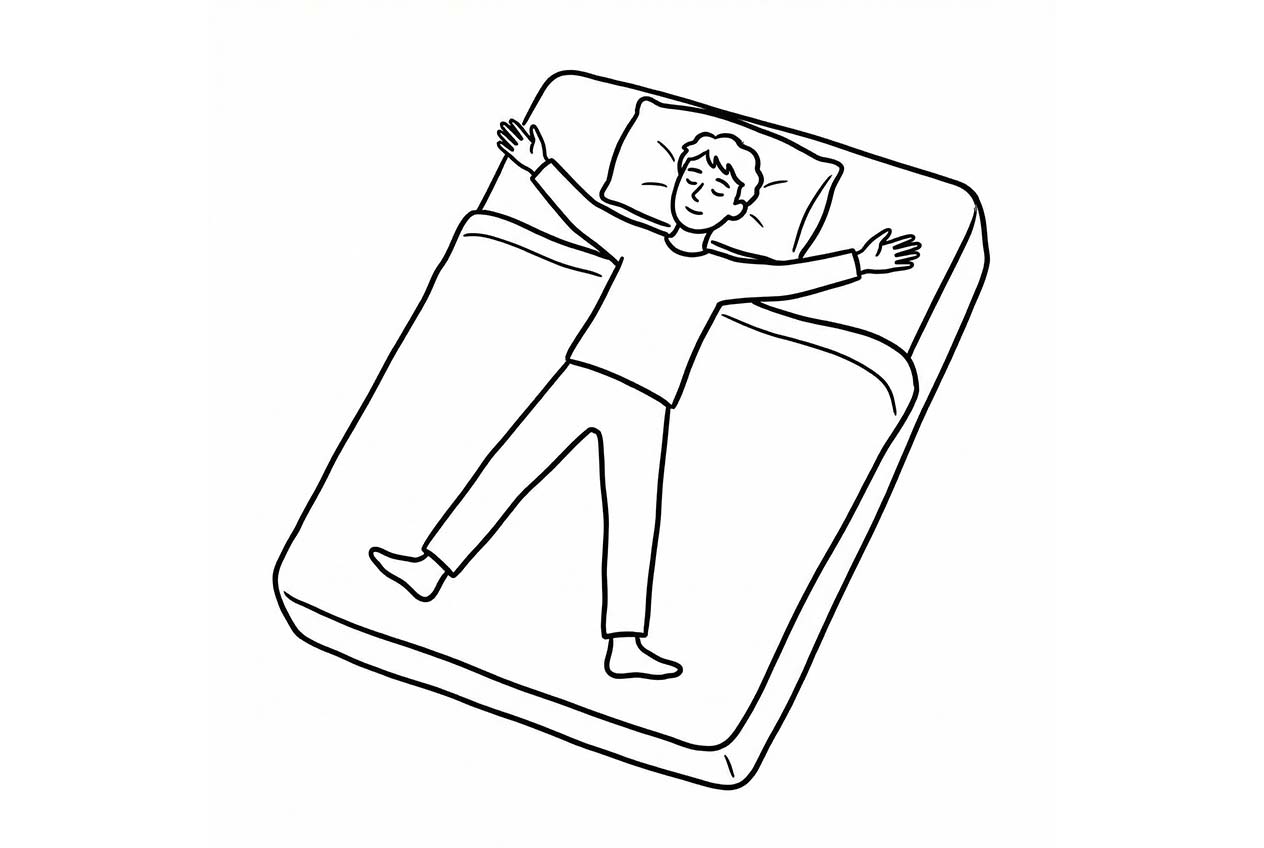
What is it: You sleep on your back with your arms and legs spread wide.
What’s happening in your body: Your chest is open, but raised arms can pull your shoulders backward and your lower back may arch excessively.
Common mistake: Using a head pillow that is too thick, which pushes the neck forward and increases strain.
Tonight’s fix: Switch to a low-profile head pillow and gently hug a thin cushion to support your arms if needed.
Why this works: Keeps your neck and shoulders aligned while preventing your lower back from over-arching.
Structural fix: Look for a mattress with high responsiveness and edge support. A pocket sprung mattress with zoned support is ideal, as it supports the shoulders, waist, and hips evenly.
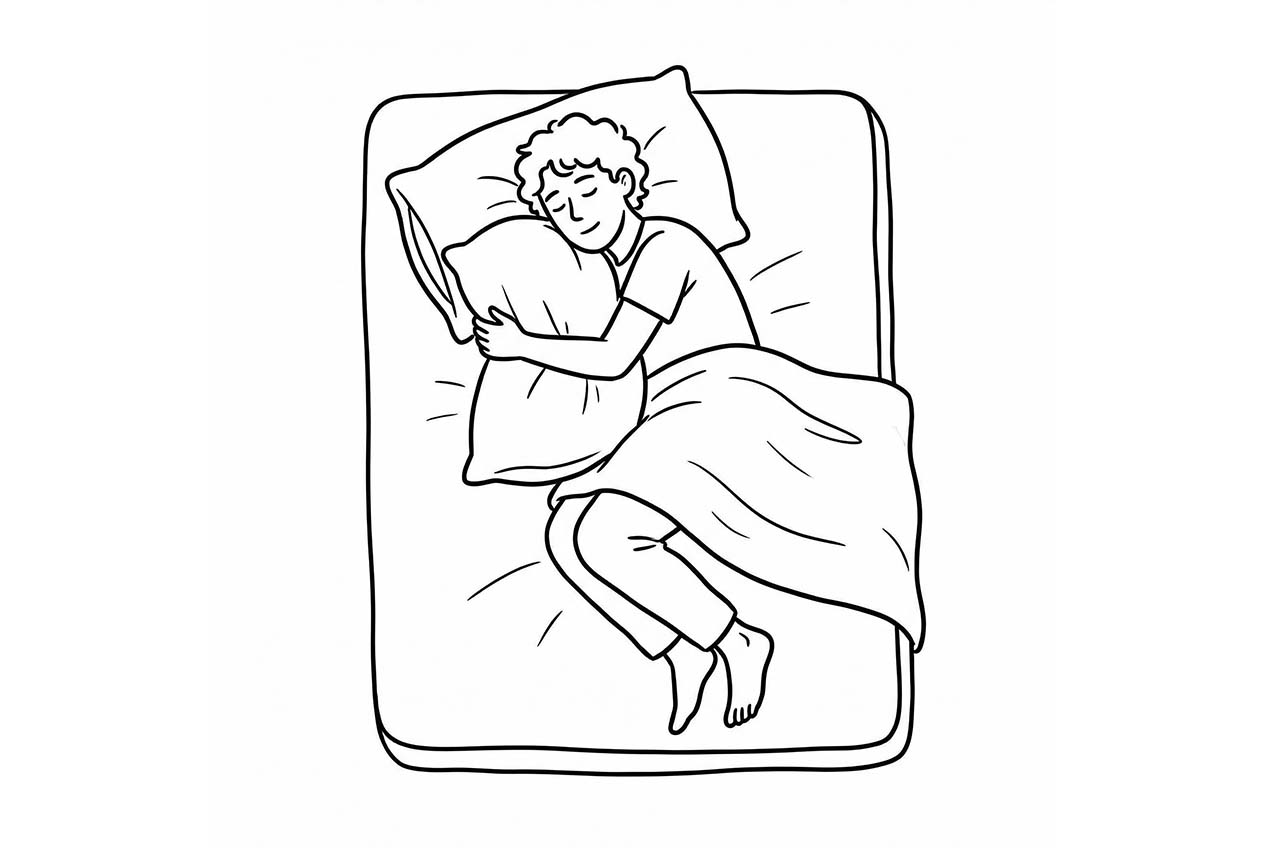
What is it: You sleep on your back with your arms wrapped around a pillow or your chest slightly elevated.
What’s happening in your body: Hugging a pillow can slightly rotate the upper spine and compress the shoulders inward.
Common mistake: Using a pillow that is too soft or too high, which allows the arms to sag and the shoulders to round forward.
Tonight’s fix: Opt for a firm, narrow pillow for hugging that keeps your shoulders aligned with your spine.
Why this works: Maintains spinal neutrality while still giving the comfort of a hug, preventing upper back and shoulder tension.
Structural fix: A mattress with an independent response, like pocket springs, allows your upper body to sink slightly without compromising lumbar or hip support.
If you wake up with a crick in your neck or a dip in your lower back, your setup is likely too soft. Stomach sleeping puts your spine in a less neutral position, but these tips can reduce strain and improve comfort if it’s your preferred position.
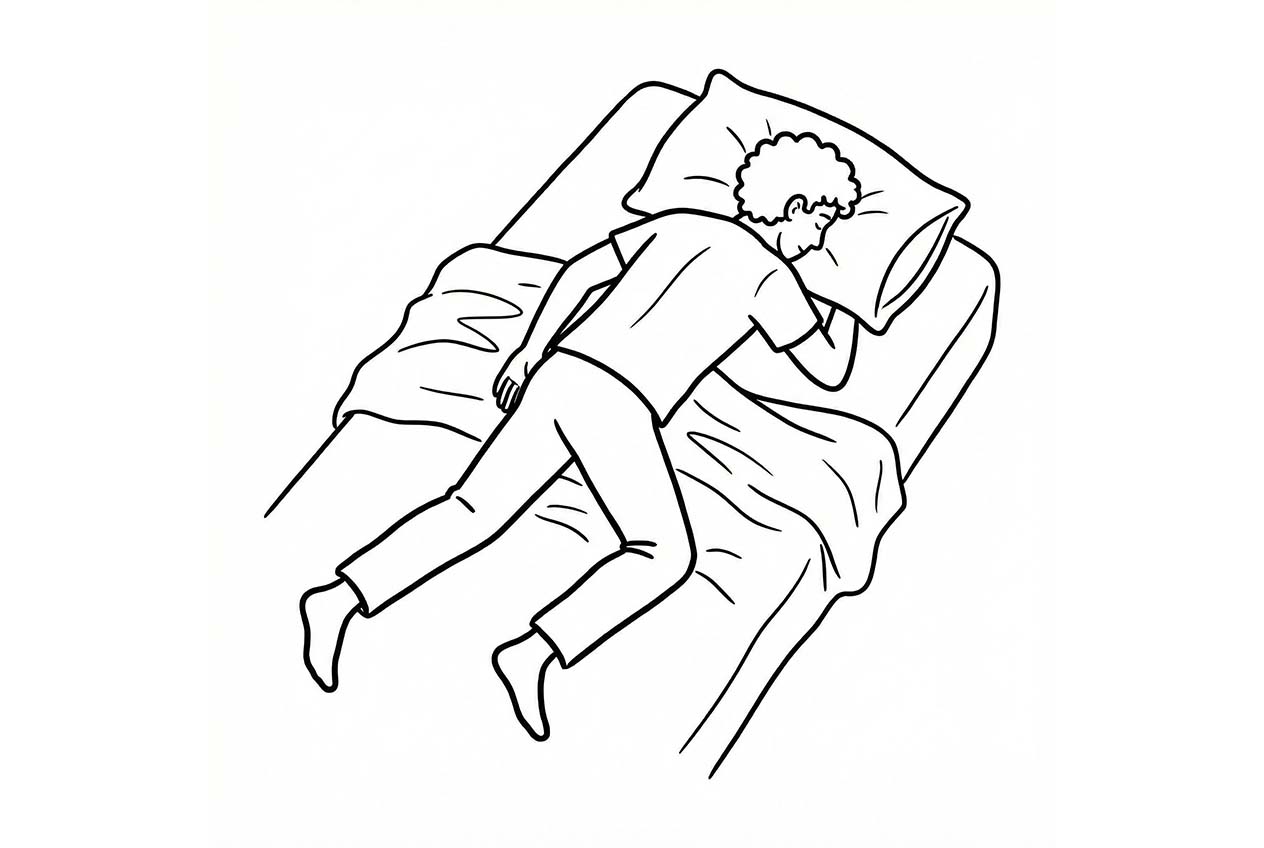
What is it: You sleep face down on your stomach with your arms tucked under your head or alongside your body.
What’s happening in your body: Gravity pulls your midsection down, creating a hammock effect. The hips sink, arching the lower spine, and the neck is twisted to one side for breathing.
Common mistake: Using a thick head pillow, which increases neck rotation and torque, or letting your pelvis drop too far into a soft mattress.
Tonight’s fix: Sleep without a head pillow and place a flat pillow or thin folded towel under your pelvis.
Why this works: Lifts the hips, straightens the lower spine, and keeps the neck closer to neutral, reducing strain and improving airflow.
Structural fix: You need a firm mattress with high surface resistance to prevent sagging in the midsection. High-density memory foam works well here because it maintains torso alignment while supporting pressure points. Pocket sprung and latex options are great alternatives too as they provide similar support.
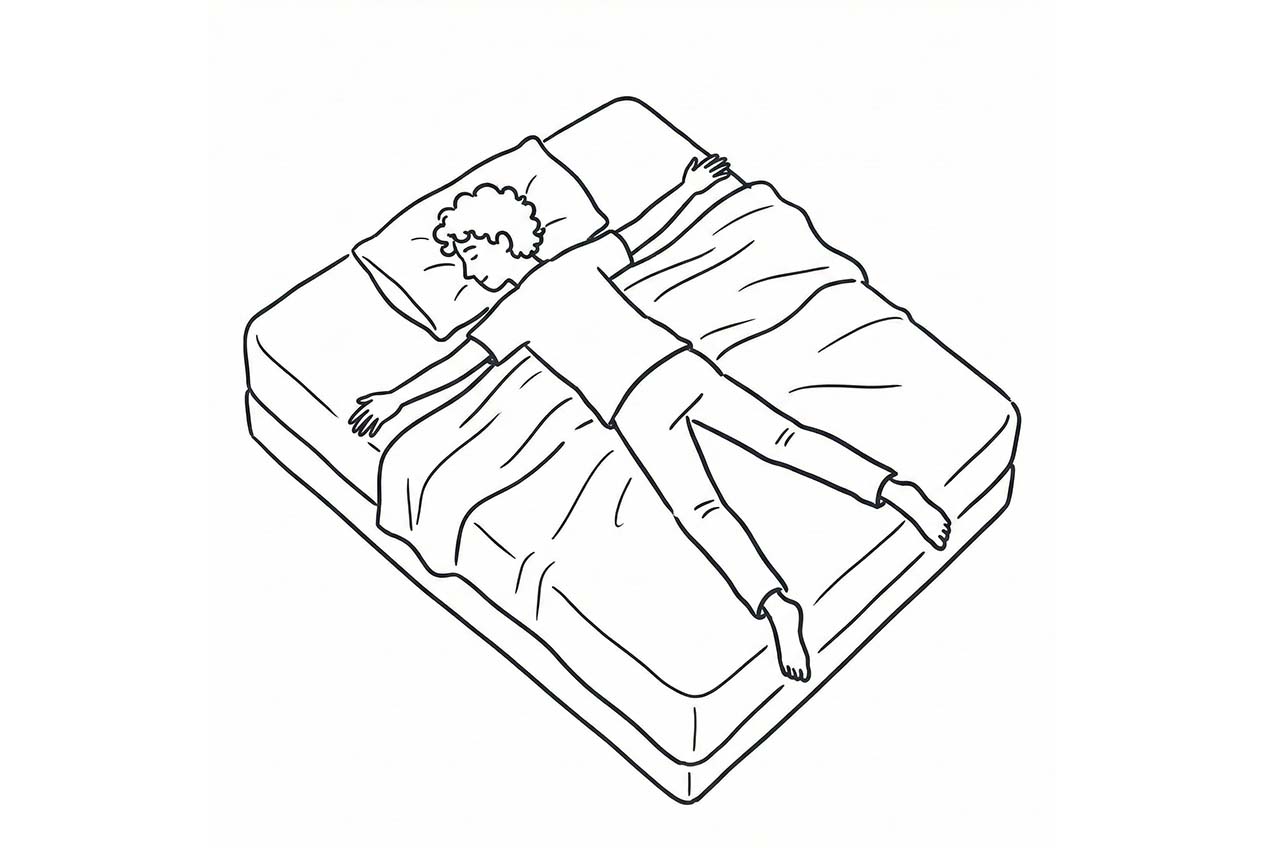
What is it: You sleep face down with arms and legs spread wide.
What’s happening in your body: The chest opens, but the torso and hips sink unevenly, placing extra stress on the lower back and shoulders.
Common mistake: Using no pelvic support or a mattress that’s too soft, which allows the spine to arch excessively.
Tonight’s fix: Place a thin pillow under the pelvis and a flat pillow under one shoulder if it feels unsupported.
Why this works: Supports the midsection to reduce lower back arching and keeps the shoulders aligned to prevent upper back tension.
Structural fix: A firm mattress with independent response (pocket springs or zoned high-density memory foam or latex) ensures your torso stays level while allowing small contouring to your shoulders.
Not everyone fits into just one sleeping position; this is called combination sleeping and often means that you’re more active in bed than most people. That’s totally fine though. It just means you need to have the right kind of support for you. Opting for a pocket sprung mattress is often the best option for you here as a long term solution as its independent response allows it to adapt better to your movement when compared to other options. It also will mean if you have a sleeping partner, they are less likely to be disturbed by your movement too.
Regardless of your sleeping position, including those described above, you need to ensure that you have a base that supports evenly without flexing under the hips or shoulders. For example, our handmade wooden bed frames use 75mm slat spacing to meet this principle. This specific spacing is the structural key to preventing mattress sagging and ensuring your investment can evenly disperse loads as intended for years to come.
If you’ve tried the positioning tweaks above and you’re still feeling discomfort, it may be that your mattress is getting in the way of proper rest and recovery. Comfort doesn’t have to be “perfect”, it just needs to take pressure off and stop anything that’s aggravating your body. And if this setup eases your symptoms, you can stop there. That’s a good sign you’ve found a more natural, neutral position for you.
The table below offers a quick glance at the best interventions for your position:
Position | Main Risk | Tonight’s Fix | Best mattresses |
Side | Shoulder and hip pressure | Pillow height and knee support | Memory foam or pocket spring |
Back | Lumbar bridge | Under-knee pillow | Memory foam or pocket spring |
Front | Neck torque | Pelvic pillow | Memory foam, latex, or pocket spring |
Hopefully after reading this, you should have an idea if your sleep issues are positional, structural, or both. For a deeper technical dive into spring types and materials, explore our full mattress buying guide. Also, when you’re ready to try a new mattress, don’t forget that we offer a 100-day trial on our most popular models, so you get the peace of mind you deserve.

WE VALUE YOUR PRIVACY
We use cookies to enhance your browsing experience, serve personalised ads or content, and analyse the traffic with 3rd party services. By clicking ‘Accept’, you consent to our use of cookies, visit our Privacy Policy and our Cookie Policy for more info.
Please select one of the delivery countries below or navigate to our UK website for UK delivery options.
Note: International shipping prices are charged per bed rather than per order. This is due to the bulky nature and weight of these products.